
Award in Project Management
In this module, students will explore the critical steps of project management i.e: research, discovery and planning (including HR planning), executing, and testing, measuring and iterating.
 MQF/EQF Level: 7
ECTS : 12 Credits
0 Enrolled
MQF/EQF Level: 7
ECTS : 12 Credits
0 Enrolled
-
OrientationDirector’s Introduction03:27Orientation10:52Understanding Podcasts01:46Understanding Pre-recorded Lectures02:25Understanding Pre-recorded Interviews01:54Understanding Case Studies01:47Understanding Discussion Boards02:30Ascencia Style SheetAI PolicyPolicy for Online Interaction and Behaviour for E-Academic Students
-
Coursework: Project ManagementIntroductory Podcast00:06:05Assignment Podcast00:04:56
-
Section 1: Introduction to Project Management.Lecture 1: Part 1: Foundations and Evolution of Project Management01:22:59Lecture 1: Part 2: Key Components and Managerial Roles in Project Management01:28:36Lecture 1: Part 3: Project Management in Business: Significance and Distinction from Operations Management01:46:16Lecture 1: Part 4: Project Management Methodologies (Agile, Waterfall, PRINCE2, etc.)01:33:10Journal Article: What Makes a Good Project Manager?
-
Section 2: Project Life Cycle and FrameworksLecture 2: Part 1: Project Life Cycle and Phases of Management01:28:16Lecture 2: Part 2: Stakeholder Management in the Project Life Cycle01:42:52Lecture 2: Part 3: Project Frameworks and Their Application01:16:45Lecture 2: Part 4: Project Governance and Oversight01:13:28Lecture 2: Part 5: Lessons Learned and Best Practices in Project Life Cycle01:23:59Journal Article: Critical Success Factors Across the Project Life Cycle
-
Section 3: Project Planning and Scope ManagementLecture 3: Part 1: Importance of Project Planning00:55:53Lecture 3: Part 2: Developing a Project Charter01:27:47Lecture 3: Part 3: Defining Project Scope and Scope Creep01:12:11Lecture 3: Part 4: Work Breakdown Structure (WBS) and Task Management01:18:36Lecture 3: Part 5: Creating a Project Schedule01:32:07Lecture 3: Part 6: Milestones, Deliverables, and Critical Path Method (CPM)02:17:22Lecture 3: Part 7: Managing Project Constraints01:39:54Lecture 3: Part 8: Project Estimation Techniques01:13:05Lecture 3: Part 9: Microsoft Project, Teamwork, and Other Tools01:40:43Journal Article: Project Scope Management Through Multiple PerspectivesGuest Interview: Part 1: Manya Russo00:30:20Guest Interview: Part 2: Manya Russo00:37:03
-
Section 4: Project Resource and Cost ManagementLecture 4: Part 1: Resource Planning and Allocation01:31:27Lecture 4: Part 2: Human Resource Management in Projects01:15:37Lecture 4: Part 3: Managing Virtual Teams01:36:42Lecture 4: Part 4: Cost Estimation and Budgeting01:12:33Lecture 4: Part 5: Fixed, Variable, Direct, and Indirect Costs01:25:49Lecture 4: Part 6: Project Procurement and Supplier Selection01:45:40Lecture 4: Part 7: Financial Tracking and Reporting01:17:58Lecture 4: Part 8.1: Project Baselines and Budget Adjustments01:05:23Lecture 4: Part 8.2: Project Baselines and Budget Adjustments00:55:07Lecture 4: Part 9: Cost Control Methods01:36:08Journal Article: Resource Planning and Resource Allocation in the Construction Industry
-
Section 5: Risk Management in ProjectsLecture 5: Part 1: Risk Awareness and Identification Techniques in Project Management02:10:53Lecture 5: Part 2: Risk Assessment and Probability Analysis01:33:09Lecture 5: Part 3: Risk Mitigation Strategies00:00:00Lecture 5: Part 4: Monitoring and Controlling Risks01:43:20Lecture 5: Part 5: Contingency Planning01:59:54Lecture 5: Part 6: Project Risk Management Frameworks01:54:09Guest Interview: Muriel Grech00:46:40Journal Article: A Review of Techniques for Risk Management in Projects
-
Section 6: Project Execution and Performance MonitoringLecture 6: Part 1: Transition from Planning to Execution01:28:47Lecture 6: Part 2.1: Managing Project Teams and Collaboration00:45:33Lecture 6: Part 2.2: Managing Project Teams and Collaboration01:07:33Lecture 6: Part 3: Communication in Project Execution01:20:23Lecture 6: Part 4: Using Project Management Software01:39:08Lecture 6: Part 5: Performance Metrics and KPI Tracking01:20:02Lecture 6: Part 6: Agile Execution and Adaptability01:37:13Lecture 6: Part 7.1: Managing Change During Execution00:47:32Lecture 6: Part 7.2: Managing Change During Execution00:42:21Lecture 6: Part 8: Controlling Quality in Project Execution01:53:23Lecture 6: Part 9: Overview of Project Management Software01:57:37Lecture 6: Part 10: Collaboration Tools for Remote Teams01:46:09Guest Interview: Zenah Hemedan00:37:16Journal Article: Monitoring of Business Process Execution Based on Performance Indicators
-
Section 7: Project Closure and EvaluationLecture 7: Part 1: Importance of Project Closures01:44:48Lecture 7: Part 2: Steps in Closing a Project01:46:00Lecture 7: Part 3: Post-Project Review and Lessons Learned01:36:39Lecture 7: Part 4: Conducting a Project Audit01:29:40Lecture 7: Part 5: Evaluating Project Success01:22:31Lecture 7: Part 6: Documentation and Knowledge Transfer01:39:35Lecture 7: Part 7: Document Management in Project Teams01:38:14Journal Article: Application of Social Impact Assessment During Project Operation and Closure
-
Section 8: Advanced Project ManagementLecture 8: Part 1: Strategic Project Management01:15:26Lecture 8: Part 2: Portfolio and Program Management01:27:55Lecture 8: Part 3: Innovation and Disruptive Technologies in Project Management01:39:41Lecture 8: Part 4.1: Sustainable and Green Project Management00:47:51Lecture 8: Part 4.2: Sustainable and Green Project Management00:50:22Lecture 8: Part 5: Managing Mega Projects01:44:33Lecture 8: Part 6: Change Management in Large-Scale Projects01:37:56Lecture 8: Part 7: Ethics and Social Responsibility in Project Management02:05:21Lecture 8: Part 8: Using Gantt Charts and Dashboards01:19:20Journal Article: Preparing Project Managers to Deal with Complexity - Advanced Project Management Education
-
Section 9: Future Trends in Project ManagementLecture 9: Part 1: The Future of Project Management01:29:06Lecture 9: Part 2: Digital Transformation and Project Management01:27:10Lecture 9: Part 3.1: Emerging Technologies in Project Management01:02:12Lecture 9: Part 3.2: Emerging Technologies in Project Management01:04:41Journal Article: Towards Project Management 2.0
In this module, students will explore the critical steps of project management ie: research, discovery and planning (including HR planning), executing, and testing, measuring and iterating. Students will understand how projects are initiated, implemented, monitored, controlled and closed in a changing environment. This module aims to equip students with the knowledge and skills necessary to manage projects effectively and efficiently. The module will cover the key concepts, processes and techniques of project management, and provide students with an opportunity to apply these concepts in real-world situations. Students will study behaviours in projects and gain an appreciation in how their own behaviours have an impact on others and on the overall performance at project, program and organsational levels.
Programme Outcomes
- Students will learn about addressing the needs of all project stakeholders in an ethically responsible way.
- Upon completion of the module, students will be able to identify and apply project management knowledge areas, lifecycles and processes for the effective management of projects.
- MQF/EQF Level 6 qualification. However, students’ circumstances and experiences may also be considered during the application process—five years of relevant working experience in the industry of specialization.
- Proof of B2 level of English should be provided by the students upon application – IELTS level/grade 6 or the student’s country equivalent.
- A Bachelor’s degree or graduate degree in humanities, sciences, human resources, organisational behaviour, business, administration, management, communication, journalism, psychology, arts or a related field.
- Minimum 180 ECTS at MQF/EQF Level 6 previously acquired at a Higher Education institution.
- Outstanding written and oral communication skills.
- A minimum of one year of work experience in a business environment will be considered as an asset.
Course Syllabus Podcast
Gain a Comprehensive Understanding of the Course Syllabus with Our Informative Podcast.
- Assignment - 100%
- Eportfolio
- You can submit your assessment at any time during the course.
What’s included
-
Duration :Full Time - 3 Months
Part Time - 6 Months - Learning: 300 +Hours
- Certificate
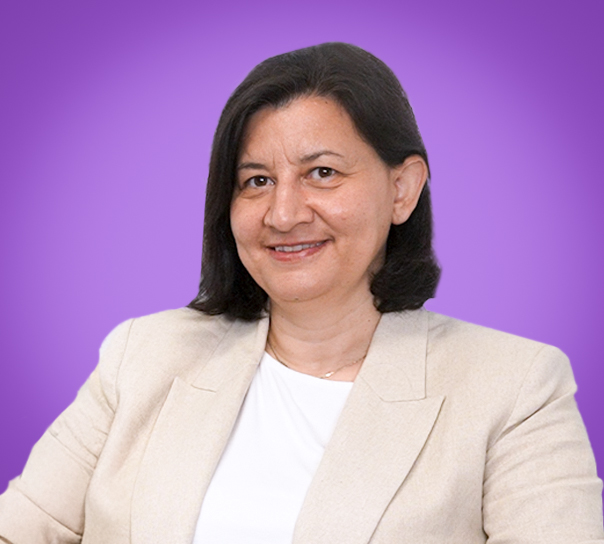

Zenah Hemedan
Project Management Professional

Manya Russo
Project Manager, NGO

Muriel Grech
Owner, MG Projects